La programmation de l'ANTE Festival 2026 se finalise...
La construction de cette page est bientôt terminée
Tuesday 14th October
Thursday 16th October
Tuesday 14th October
Thursday 16th October
Long reduced to a simple form of "historicism", or even pastiche, the architectural heritage of the 19th century deserves to be reconsidered in the light of the evolution of building in Belgium, where "eclecticism" played a decisive role in the transition to modernity. Begun at the end of the eighteenth century and fully developed after 1830, this trend was characterised by an inventive reinterpretation of old styles, which architects combined with remarkable freedom. This approach gave rise to a prolific output, marked by a wide range of influences, that went far beyond simply copying the past to pave the way for a more innovative architectural language.
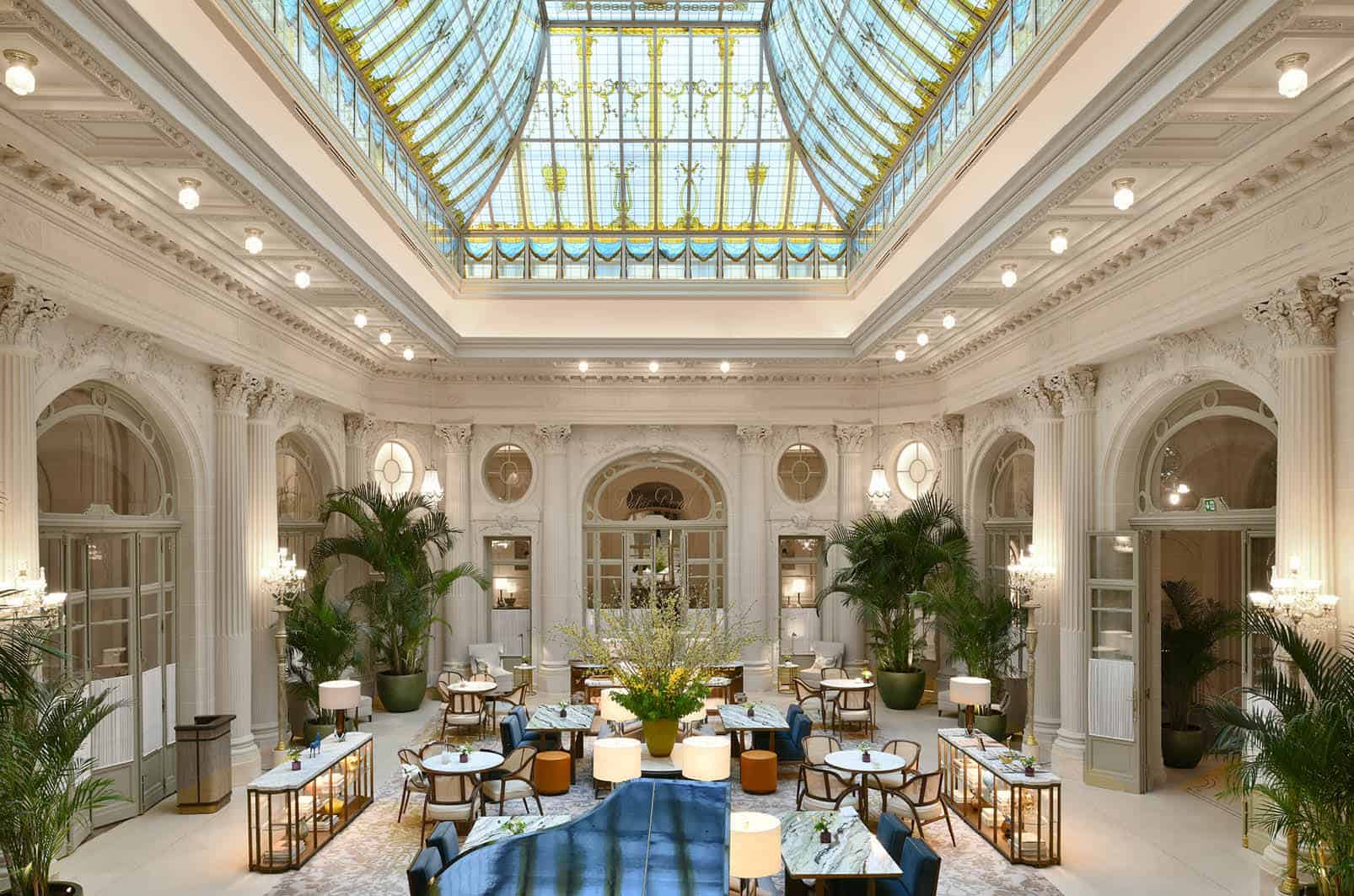
This " long nineteenth century " It was also an opportunity to make significant advances in the design of civil buildings, in particular through a rethinking of plans, incorporating spaces that were better adapted to new urban lifestyles. The use of materials such as iron, cast iron and glass, combined with a new focus on comfort, heralded the experiments of Art Nouveau. The creative wealth of this period should therefore be seen as a veritable laboratory of ideas, the prelude to a definite architectural modernity.
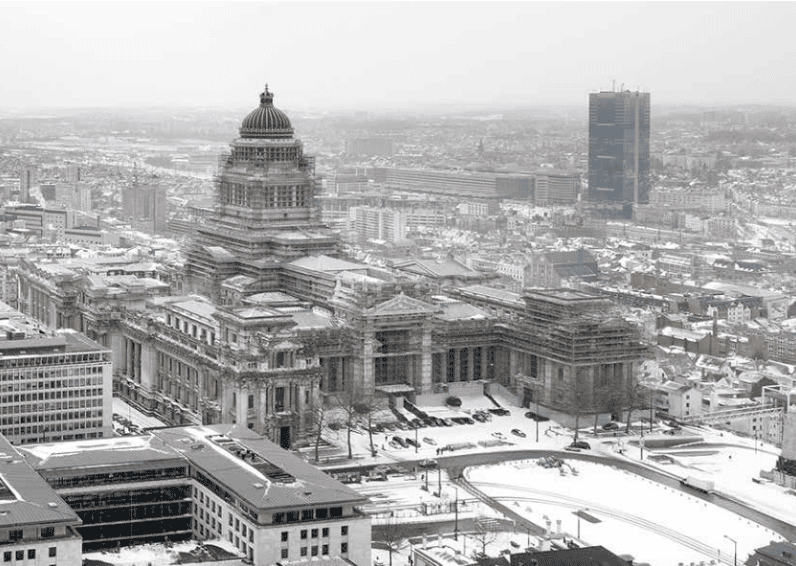
Thomas Greck, an architect specialising in heritage, is pursuing an in-depth study of the Neo-Gothic movement in Belgium, from 1780 to 1935. He is the co-author of an architectural study of the Palais de Justice in Brussels, to be carried out in 2019-2022 with Thierry Henrard, architect.
Relatief snel na de uitvinding van de fotografie begonnen verschillende architecten, ingenieurs, aannemers, opdrachtgevers of eenvoudigweg fotografen met een voorliefde voor de stad en haar architectuur de bouw- of restauratieprojecten van hun tijd te documenteren. Op die manier is er ook van de 19e-eeuwse Brusselse bouwwerven best wat interessant beeldmateriaal bewaard gebleven, beeldmateriaal dat ons bijzonder waardevolle historische inzichten oplevert over de veranderende bouwpraktijken van de 19e eeuw.
Aan de hand van tal van foto's, gaande van de restauratie van het Brusselse stadhuis over de overwelving van de Zenne tot de bouw van prestigieuze projecten als de Beurs, het Justitiepaleis of de Serres van Laken, laat architectuurhistoricus Inge Bertels zien welke impact de Brusselse bouwprojecten hadden op het stedelijke weefsel, hoe ze ambities van de stad en (een deel van) haar bewoners reflecteerden en hoe gaandeweg de rollen van de bouwactoren, de bouwinstrumenten en -machines, en de veiligheidspraktijken evolueerden in de tijd.
Inge Bertels (°1976) is gewoon hoogleraar architectuurgeschiedenis en bouwcultuur aan de Universiteit Antwerpen en sinds 2021 decaan van de faculteit Ontwerpwetenschappen. Haar expertise omvat negentiende- en twintigste-eeuwse bouw-, architectuur- en stadsgeschiedenis.
De Brusselse bouwwerven van de 19e eeuw in beeld
door Inge Bertels
Lecture in
Power and Architecture: The case of Brussels in the long 19 th century
By Manuel Schmitz
Architecture reflects power: the powerless are homeless, the powerful reside in palaces. Of course, power is not the only message that architecture can convey. Architecture can celebrate beauty or praise efficiency. It can embody rationality or faith, belief in the past or hope for the future. Architecture can sing of high ideals or shout about greedy needs. But architecture can never be quite about power. Buildings are symbols of power. Every building is.
In his lecture, Manuel Schmitz will look at the case of Brussels in the long 19th century (1780-1920), with a focus on political rather than cultural or economic power. This focus does not imply an exclusive discussion of political architecture; domestic architecture, for instance, can also reflect underlying political structures. The lecture will consider the extent to which the establishment of the Belgian nation-state in 1830–31 represented a watershed moment in Brussels’ building practices. Did becoming a capital make a substantial difference for the architecture of the city? Or are the continuities more prevalent? Is architecture a capital question?
Manuel Schmitz, PhD, is a political scientist, author and guide, living and working in Brussels.
Architecture as an expression of powerArchitecture as an expression of power
by Manuel Schmitz
Lecture in 🇬🇧
Le long XIXe siècle
by Thomas Greck
Lecture in 🇫🇷
Long reduced to a simple form of "historicism", or even pastiche, the architectural heritage of the 19th century deserves to be reconsidered in the light of the evolution of building in Belgium, where "eclecticism" played a decisive role in the transition to modernity. Begun at the end of the eighteenth century and fully developed after 1830, this trend was characterised by an inventive reinterpretation of old styles, which architects combined with remarkable freedom. This approach gave rise to a prolific output, marked by a wide range of influences, that went far beyond simply copying the past to pave the way for a more innovative architectural language.
This " long nineteenth century " It was also an opportunity to make significant advances in the design of civil buildings, in particular through a rethinking of plans, incorporating spaces that were better adapted to new urban lifestyles. The use of materials such as iron, cast iron and glass, combined with a new focus on comfort, heralded the experiments of Art Nouveau. The creative wealth of this period should therefore be seen as a veritable laboratory of ideas, the prelude to a definite architectural modernity.
Thomas Greck, an architect specialising in heritage, is pursuing an in-depth study of the Neo-Gothic movement in Belgium, from 1780 to 1935. He is the co-author of an architectural study of the Palais de Justice in Brussels, to be carried out in 2019-2022 with Thierry Henrard, architect.
De Brusselse bouwwerven van de 19e eeuw in beeld
door Inge Bertels
Lecture in 🇫🇷
Relatief snel na de uitvinding van de fotografie begonnen verschillende architecten, ingenieurs, aannemers, opdrachtgevers of eenvoudigweg fotografen met een voorliefde voor de stad en haar architectuur de bouw- of restauratieprojecten van hun tijd te documenteren. Op die manier is er ook van de 19e-eeuwse Brusselse bouwwerven best wat interessant beeldmateriaal bewaard gebleven, beeldmateriaal dat ons bijzonder waardevolle historische inzichten oplevert over de veranderende bouwpraktijken van de 19e eeuw.
Aan de hand van tal van foto's, gaande van de restauratie van het Brusselse stadhuis over de overwelving van de Zenne tot de bouw van prestigieuze projecten als de Beurs, het Justitiepaleis of de Serres van Laken, laat architectuurhistoricus Inge Bertels zien welke impact de Brusselse bouwprojecten hadden op het stedelijke weefsel, hoe ze ambities van de stad en (een deel van) haar bewoners reflecteerden en hoe gaandeweg de rollen van de bouwactoren, de bouwinstrumenten en -machines, en de veiligheidspraktijken evolueerden in de tijd.
Inge Bertels (°1976) is gewoon hoogleraar architectuurgeschiedenis en bouwcultuur aan de Universiteit Antwerpen en sinds 2021 decaan van de faculteit Ontwerpwetenschappen. Haar expertise omvat negentiende- en twintigste-eeuwse bouw-, architectuur- en stadsgeschiedenis.
Architecture as an expression of powerArchitecture as an expression of power
by Manuel Schmitz
Lecture in 🇬🇧
Long reduced to a simple form of "historicism", or even pastiche, the architectural heritage of the 19th century deserves to be reconsidered in the light of the evolution of building in Belgium, where "eclecticism" played a decisive role in the transition to modernity. Begun at the end of the eighteenth century and fully developed after 1830, this trend was characterised by an inventive reinterpretation of old styles, which architects combined with remarkable freedom. This approach gave rise to a prolific output, marked by a wide range of influences, that went far beyond simply copying the past to pave the way for a more innovative architectural language.
This " long nineteenth century " It was also an opportunity to make significant advances in the design of civil buildings, in particular through a rethinking of plans, incorporating spaces that were better adapted to new urban lifestyles. The use of materials such as iron, cast iron and glass, combined with a new focus on comfort, heralded the experiments of Art Nouveau. The creative wealth of this period should therefore be seen as a veritable laboratory of ideas, the prelude to a definite architectural modernity.
Thomas Greck, an architect specialising in heritage, is pursuing an in-depth study of the Neo-Gothic movement in Belgium, from 1780 to 1935. He is the co-author of an architectural study of the Palais de Justice in Brussels, to be carried out in 2019-2022 with Thierry Henrard, architect.